THE SCALE OF THE CRISIS: KEY FIGURES
UNHCR’s humanitarian aid in Syria
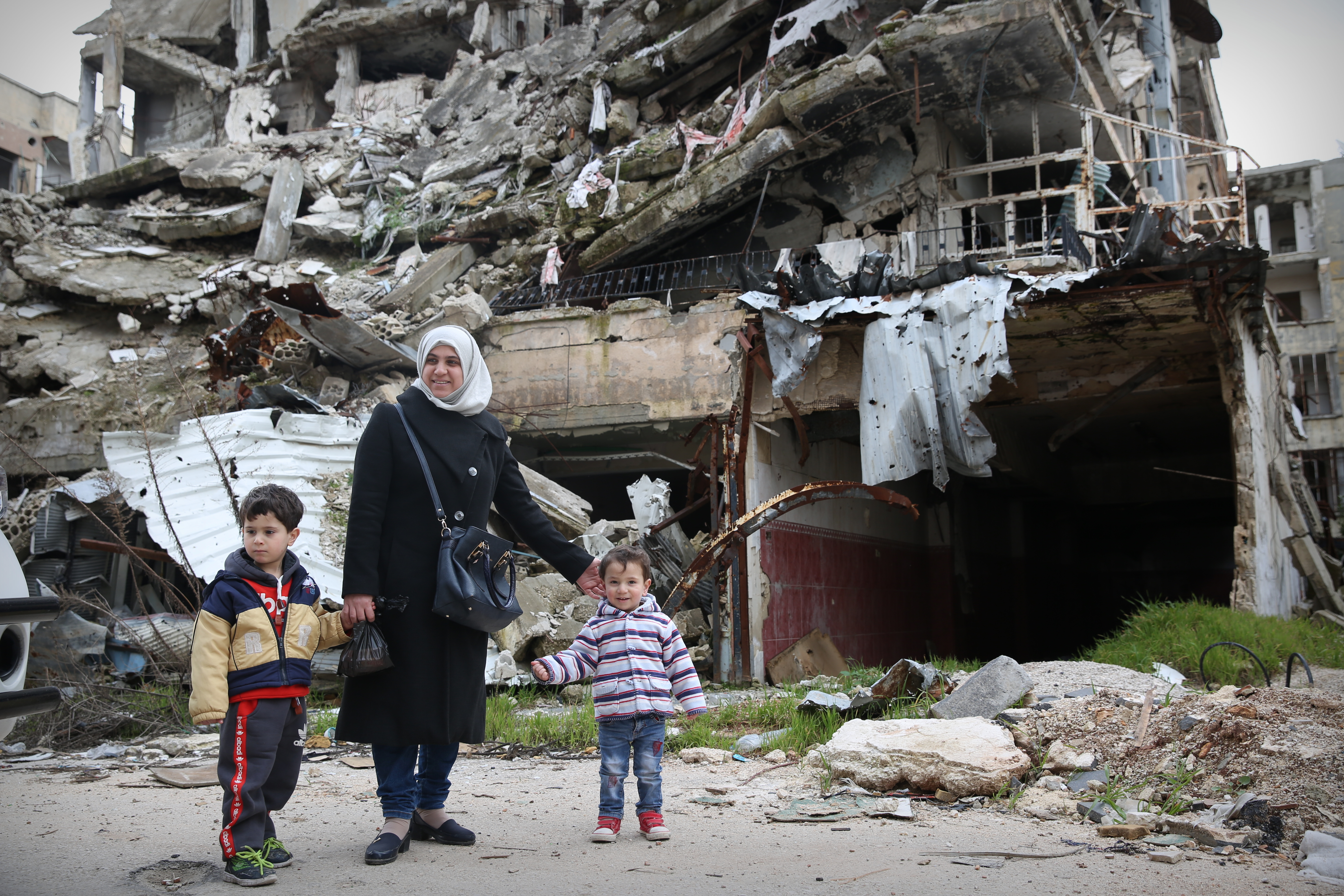
A displaced population
The war in Syria has caused the largest displacement crisis of the decade.
Even today:
- 7.4 million people remain displaced within Syria, often living in precarious conditions.
- In Türkiye, more than 2.4 million Syrian refugees registered with UNHCR are trying to rebuild their lives.
- In Lebanon, more than 600,000 refugees struggle daily; around 70% live below the poverty line, many in overcrowded accommodation.
- In Jordan, 93% of the 475,000 Syrian refugees also live below the poverty line.
Millions of families are still unable to meet their basic needs and remain dependent on aid for shelter, healthcare, food and education for their children.
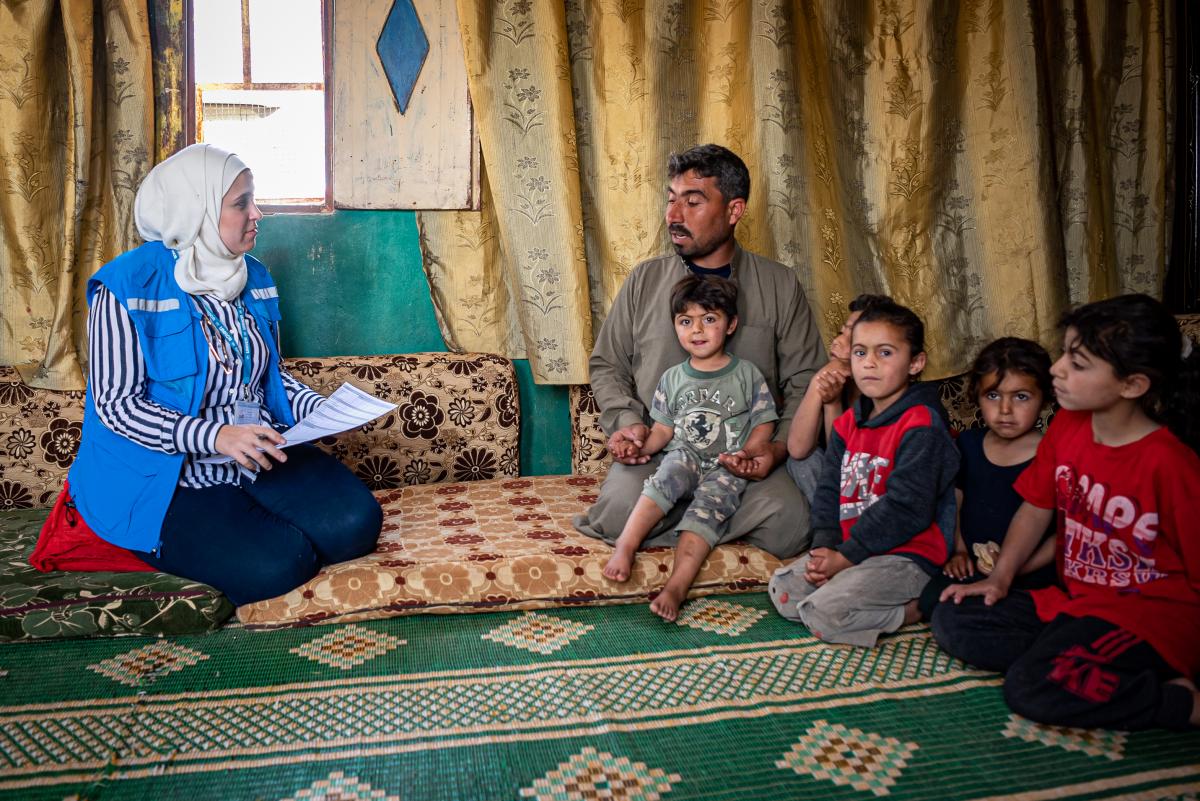
A humanitarian disaster
Since 2011, the Syrian crisis has claimed hundreds of thousands of lives and destroyed essential infrastructure.
The country remains deeply scarred: a third of homes are damaged or uninhabitable, hospitals barely function, and access to water or electricity is uncertain.
In these conditions, 16.7 million Syrians still cannot survive without regular humanitarian assistance.
The challenges remain immense: insecurity, lack of jobs, inflation, collapsed public services… all obstacles preventing displaced families from regaining a dignified life.
A difficult return to Syria
Despite the end of the conflict, conditions in Syria remain extremely challenging, and only some families choose to return voluntarily today.
More than a million Syrians have already gone back home, but daily life remains harsh: ruined houses, limited services, destroyed infrastructure and few resources to restart a normal life.
This is why continued support is essential, both for those who remain displaced and for those returning:
- humanitarian needs remain immense
- families need support to resettle
- UNHCR facilitates voluntary returns when conditions allow, providing transport, relocation and housing support
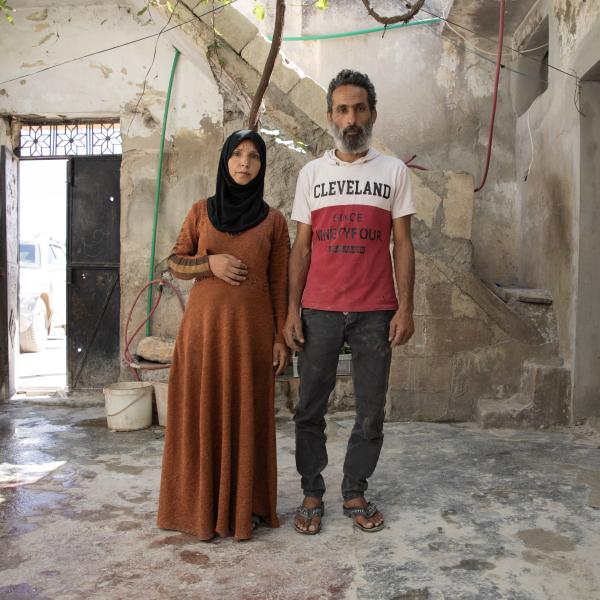
Back after 10 years in exile
“Thank God we are back. Everyone needs their homeland. But the situation is very difficult – financially, emotionally. I am 46 years old, and I feel like I have to start again from scratch.”
Amina and Waleed have returned to their home in Idlib. Despite the ruins, they believe in a better future.
UNHCR’s humanitarian response in Syria
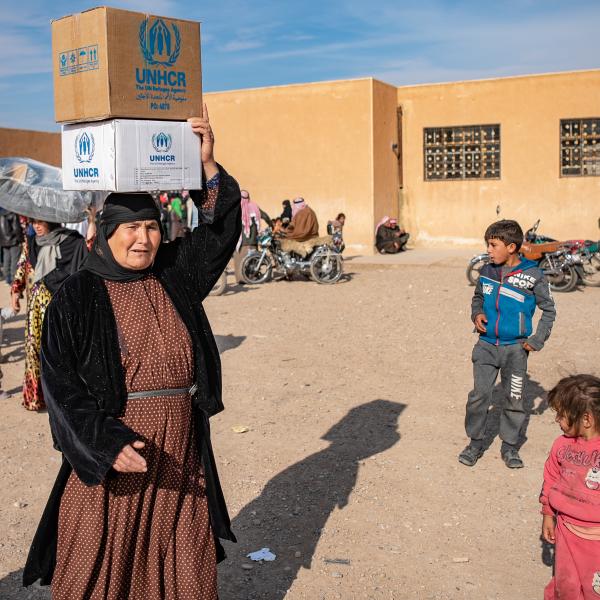
UNHCR has been working for more than a decade in Syria and neighbouring countries to support people forced to flee.
Our work includes:
- financial assistance to the most vulnerable families to buy food, medicine, fuel or winter clothing
- distribution of emergency shelters and essential items; for those still displaced in Syria
- support for voluntary returns: transport, relocation and assistance to reintegrate into an environment that has often changed dramatically
- protection, legal counselling and psychosocial support
In 2024, 566,000 people received relief items in Syria and 131,000 benefited from emergency shelter solutions.
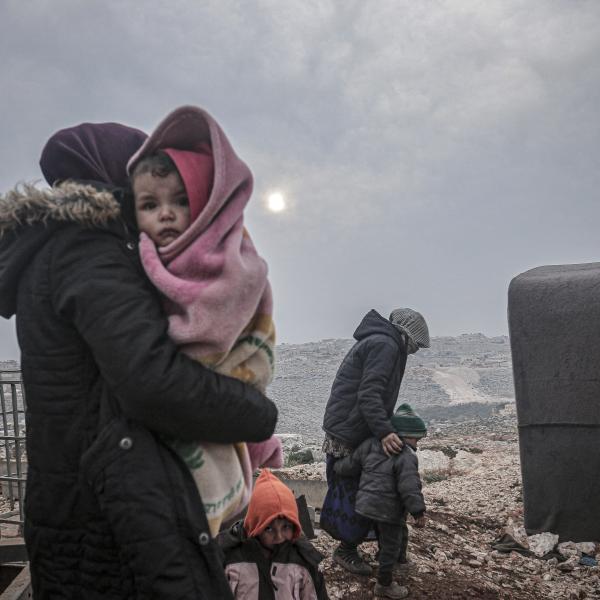
UNHCR works tirelessly to assist Syrian refugees and displaced people, the vast majority of whom are women and children.
Needs are enormous: in 2025, UNHCR secured only 10% of the required funding for its operations in Syria and in the region.
Syrian families need your support more than ever.