Global Refugee Crisis Explained: Facts, Definitions & Common Misconceptions
Learn who refugees are, how many there are worldwide, where they come from and go, and the truth behind common misconceptions. Facts and answers from Switzerland for UNHCR.
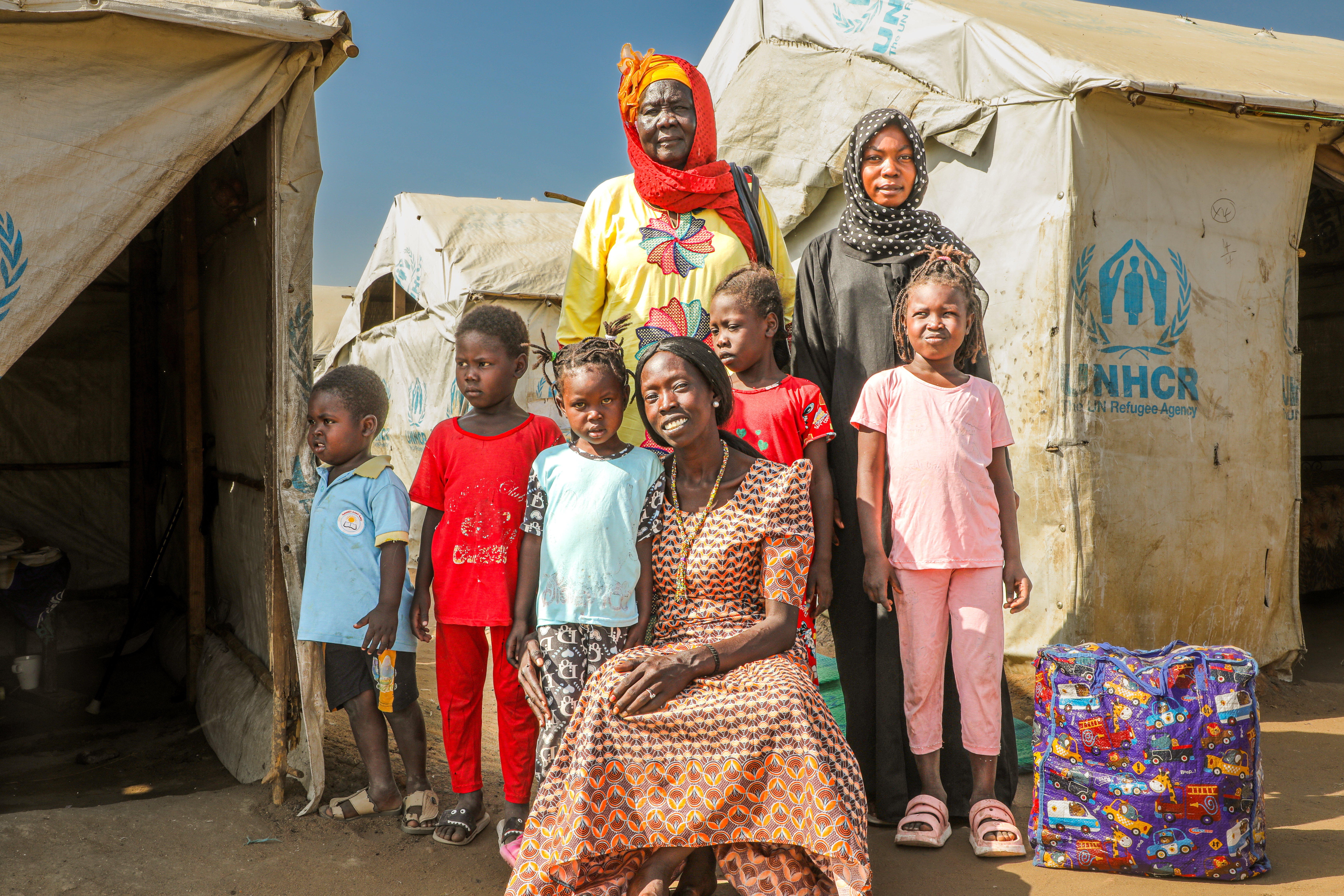
Every day, people are forced to flee their homes because of war, violence, and persecution. Understanding who refugees are — and what they face — is the first step toward building a more compassionate world. This page answers the most common questions about the global refugee crisis, based on the latest data from UNHCR, the UN Refugee Agency.
Last updated: April 2026
Quick facts about refugees
117.3 million people worldwide were forced to flee their homes by the end of June 2025 due to persecution, conflict, violence, and human rights violations.
1 in every 70 people on Earth has been displaced.
71% of refugees hosted in low- and middle-income countries
66% of refugees hosted in neighbouring countries of their country of origin
FAQ Understanding Refugees
What is a refugee?
A refugee is someone who has been forced to flee their home country because of war, violence, or persecution. They have crossed an international border into another country to find safety. Refugees cannot return home because their life would be at risk.
According to the 1951 Refugee Convention, a refugee is someone with a "well-founded fear of being persecuted for reasons of race, religion, nationality, membership of a particular social group or political opinion."
What's the difference between a refugee and a migrant?
Refugees are specifically defined and protected in international law. These are individuals who have fled their homes to escape persecution, conflict, violence, serious human rights violations or other events seriously disturbing public order, and who seek safety in another country. As a result, they require "international protection" from another country, where their own country of origin is unable or willing to protect them. They are exercising a fundamental, universal human right – the right to seek and enjoy asylum. According to international refugee law, a person is a refugee – and should be treated as such – as soon as they meet this definition, even if they are still waiting for formal recognition by States or UNHCR.
Migrants are not as specifically defined under international law, but the term has been used to refer to people who choose to move across borders, not because of any direct threats of persecution, serious harm, or death, but exclusively for other reasons, including for work, education or family reunification. Other complex factors may also be at play, such as escaping hardships due to environmental disasters, famine, or extreme poverty.
Those who leave their countries for these reasons would not ordinarily be in need of international protection, as they – unlike refugees – would continue, in principle, to enjoy the protection of their own country when they are abroad and when they return.
While not fulfilling the criteria of the refugee definition, it may be that migrants require assistance, help and protection of their rights at various points during their journeys. But they would be protected by international human rights law and, in some circumstances, they may also be entitled to protection from return to their country of origin or removal from the host country based on human rights grounds.
What is an asylum-seeker?
An asylum-seeker is someone who has fled their country and is seeking international protection, but whose claim for refugee status has not yet been decided. While they wait for a decision, they are called asylum-seekers. Once their claim is approved, they become refugees.
FAQ Global Refugee Situation
How many refugees are there worldwide?
As of June 2025, 117.3 million people worldwide were forcibly displaced due to persecution, conflict, violence, or human rights violations. It means that 1 in every 70 people on Earth has been displaced.
This includes (end of June 2025):
- 42.5 million refugees
- 67.8 million internally displaced people (IDPs)
- 8.4 million asylum-seekers
- 4.4 million stateless people
Where do most refugees come from?
The largest refugee populations and people in need of international protection come from countries experiencing ongoing conflict (mid-2025):
- Venezuela – 6.5 million
- Syrian Arab Republic – 5.5 million
- Ukraine – 5.3 million
- Afghanistan – 4.8 million
- Sudan – 2.5 million
Where do most refugees go?
Contrary to popular belief, most refugees stay close to home. By mid-2025, 66% of refugees were hosted in neighbouring countries.
Low- and middle-income countries host 71% of the world's refugees, even though these countries often have fewer resources to support them.
Top hosting countries for refugees and in people in need of protection (mid-2025):
- Colombia – 2.8 million
- Germany – 2.7 million
- Türkiye – 2.7 million
- Islamic Republic of Iran – 2.5 million
- Uganda – 1.9 million
Lebanon hosts the most refugees per capita, with approximately 1 in 8 people being a refugee.
Who are refugees?
Refugees are people just like you and me. They include:
- 40% are children – while they only account for 29% of the world's population. Many are separated from their families.
- 50% are women and girls – facing particular risks including gender-based violence
- Doctors, teachers, engineers, farmers, artists, and parents who had lives before being forced to flee
Every refugee has a unique story, skills, and dreams for the future.
FAQ Common Questions and Misconceptions
FAQ Common Questions and Misconceptions
No. Most refugees flee to the nearest safe country, which is usually a neighbouring country. Very few have the opportunity to choose their destination. Many remain in refugee camps or settlements for years, sometimes decades.
Only a tiny percentage of refugees are resettled to third countries through formal programmes. Competition for these limited spots is intense, and only the most vulnerable cases are selected.
Why don't refugees stay in the first safe country?
Many do – 66% of refugees are hosted in neighbouring countries. However, some continue onward because:
- The first country may not have signed the Refugee Convention
- Living conditions may be extremely difficult with no access to work or education
- Family members may be in another country
- They face discrimination or lack of integration opportunities
- The first country itself may be unstable or at risk of conflict
Are refugees taking jobs from local people?
Studies consistently show that refugees contribute positively to local economies when allowed to work:
- They spend money on goods and services, supporting local businesses
- They pay taxes
- They fill labour shortages
- Many start businesses that create jobs
- They bring skills and expertise
The challenge is that many countries restrict refugees' right to work, keeping them dependent on aid and preventing them from contributing fully.
Do refugees receive more benefits than locals?
No. This is a common myth. Refugees typically receive basic humanitarian assistance to survive – food, shelter, and emergency healthcare. This support is often temporary and far less than what citizens receive.
In most countries, refugees have limited or no access to social benefits available to citizens. They often face barriers to employment, education, and housing that citizens do not face.
Why don't refugees go back home?
Most refugees want to return home, but they can't because:
- The conflict or persecution that forced them to flee continues
- Their homes have been destroyed
- They face arrest, imprisonment, or death if they return
- Basic services like schools and hospitals don't exist
- The situation remains too unstable or dangerous
When conditions improve and it's safe, many refugees do return voluntarily, like it is happening in Syria. However, conflicts are lasting longer – some refugees have been displaced for decades.
What is the 1951 Refugee Convention?
The 1951 Refugee Convention is a crucial international agreement that:
- Defines who is a refugee
- Outlines the rights refugees are entitled to
- Establishes the principle of non-refoulement (not sending people back to danger)
- Sets out states' obligations to refugees
149 countries have signed the Convention or its 1967 Protocol. UNHCR serves as the guardian of this Convention, which remains as relevant today as when it was created.
What is statelessness?
Stateless people have no nationality and are not recognized as citizens by any country. There are 4.4 million stateless people worldwide (mid-2025).
Without nationality, stateless people often cannot:
- Go to school
- See a doctor
- Get a job
- Open a bank account
- Own property
- Vote or participate in political life
- Travel legally
UNHCR works to prevent statelessness and help stateless people acquire nationality.
How can refugees be sent back to danger?
Unfortunately, some countries practice "refoulement" – returning people to places where their lives are at risk. This violates international law.
UNHCR works to prevent refoulement and ensure that refugees can access asylum procedures before any return decisions are made. The principle of non-refoulement is a cornerstone of refugee protection.
Understanding the refugee crisis is the foundation of any meaningful response. Behind every statistic is a person — a parent, a child, a teacher — whose only wish is to live in safety and dignity. To learn how UNHCR and Switzerland for UNHCR work to protect and support refugees, and how you can help, visit our page on UNHCR's work and how to support refugees in Switzerland.