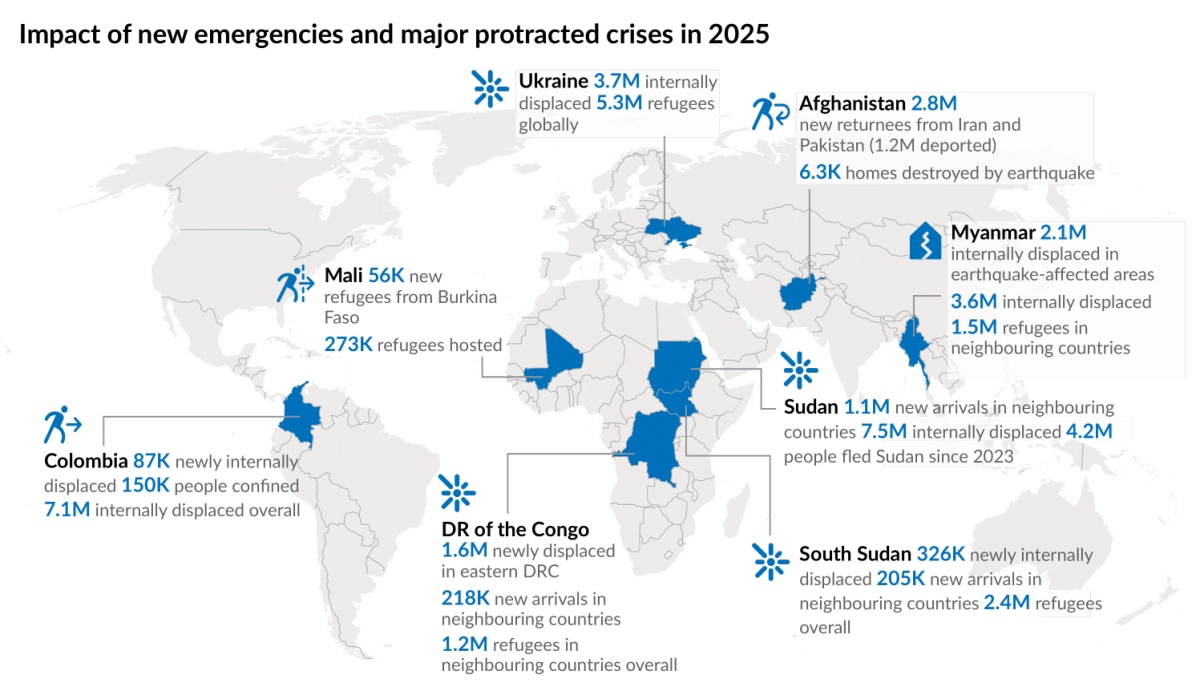
In 2025, UNHCR responded to a year marked by overlapping emergencies and deepening protracted crises, even as humanitarian funding reached unprecedented lows. With global displacement still at record levels, conflict, climate shocks and forced returns drove new waves of people to flee in countries such as the Democratic Republic of the Congo, South Sudan, Afghanistan and Myanmar, while long-running emergencies in Sudan, Ukraine and Colombia continued to demand sustained support. Across 16 countries, UNHCR managed 24 active emergency declarations, delivering life-saving protection and assistance to people forced to flee – often within days of a crisis unfolding.
Despite severe financial constraints, UNHCR mobilized emergency teams, deployed critical relief supplies from global stockpiles, and provided cash assistance to help families meet their most urgent needs. Millions accessed protection services, shelter and essential information during moments of extreme vulnerability. Yet the scale of needs far outpaced available resources. Funding in 2025 fell sharply compared to the previous year, forcing painful operational cuts even as emergencies multiplied – reducing UNHCR’s ability to respond fully and placing millions of displaced people at heightened risk.
Looking ahead to 2026, the outlook is deeply concerning. Many of today’s emergencies show no sign of resolution, while new crises loom in fragile and conflict-affected regions. The report underscores an urgent message: without increased, predictable, and flexible funding, life-saving responses will be further stretched, at a moment when protection and solidarity are needed more than ever.
FAQ
What does the UNHCR 2025 Emergencies and Protracted Crises Report cover?
The report outlines how UNHCR responded to new emergencies and long-running displacement crises worldwide in 2025, highlighting impact, challenges and urgent funding needs.
How many people were forcibly displaced globally in 2025?
By mid-2025, an estimated 117.3 million people were forcibly displaced worldwide due to conflict, violence, persecution and climate-related shocks.
Where did UNHCR respond to emergencies in 2025?
UNHCR managed 24 active emergency responses across 16 countries, including major crises in Sudan, the Democratic Republic of the Congo, South Sudan, Afghanistan, Ukraine and Myanmar.
How did funding cuts affect UNHCR’s emergency response?
Severe funding shortfalls forced UNHCR to scale back programmes and reduce staff, limiting the reach of life-saving assistance even as humanitarian needs continued to rise.
Why is flexible funding critical for humanitarian emergencies?
Flexible funding allows UNHCR to respond quickly when crises erupt, deliver emergency aid within days, and sustain protection in underfunded or prolonged emergencies.