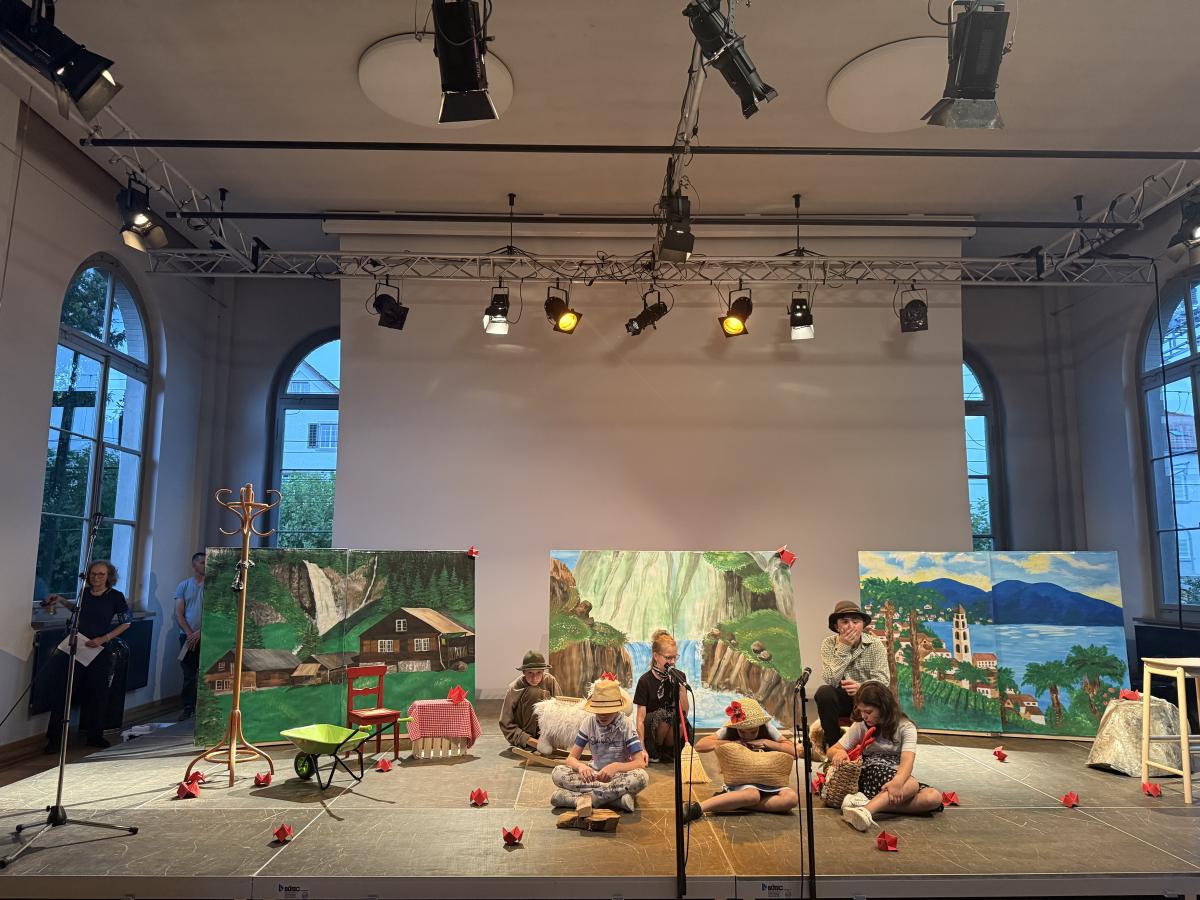
At Sonnenhof in Küsnacht, people stand together in small groups, chatting and getting to know each other.
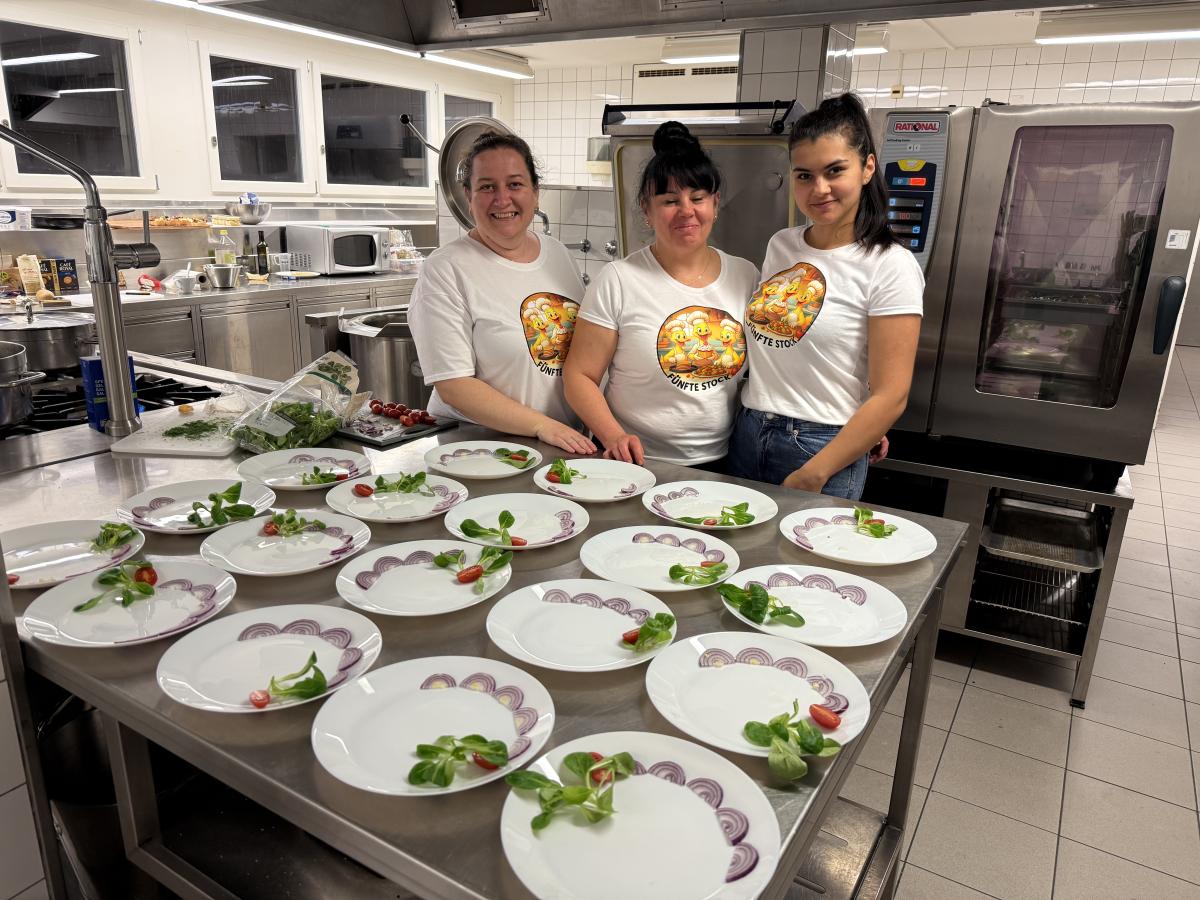
Refugees from Ukraine mingle with neighbours, volunteers and representatives of the community over drinks and snacks. Ukrainian food is cooked, shared and, above all, conversation flows: about everyday life, arriving in a new country and what connects people. The proceeds from the shared-table events go directly back to Ukraine to support local projects.
What seems so natural here is the result of an extraordinary commitment that began four years ago with a courageous decision: when the full-scale war broke out in Ukraine, the municipality of Küsnacht decided not to stand by and watch, but to take action. The Sonnenhof project created a place that continues to offer protection, stability and prospects to over a hundred particularly vulnerable people who have fled their homes.
Rapid assistance for the most vulnerable
Just a few days after the outbreak of the full-scale war, an urgent request reached Switzerland: a group of children with cancer from the Ukrainian city of Zhytomyr urgently needed medical assistance and protection. Alexander Lüchinger, an engineer from Küsnacht who had previously worked in Ukraine, responded immediately.
He organized three buses to the Polish-Ukrainian border to bring refugees, including children with serious illnesses and their families, to Switzerland. A total of around 120 people were brought safely to Küsnacht as part of this operation. ‘It was already my second trip to Ukraine within a few days,’ Lüchinger told the press.
Back in Küsnacht, the next phase began: within just five days, the previously vacant Sonnenhof retirement home – made available by the city of Zurich – was completely refurbished: electricity, water, heating, furniture and medical infrastructure were installed to provide the refugees with quick and dignified accommodation. What began as acute emergency aid quickly developed into a long-term project supported by the community and civil society.
Together instead of alone: cooperation leads to success
A central element of the project is the close cooperation between the municipal administration, civil protection, local organizations and countless volunteers. ‘The successful cooperation between committed citizens and the municipality was key to the success of the campaign, which was carried out at short notice,’ says Markus Ernst, mayor of Küsnacht. Without this combined energy and the commitment of many volunteers, the project would not have been possible in this form.
The population responded with great openness and solidarity: donations, logistical support from the military, the involvement of external companies and the willingness to provide resources made the implementation viable.
More than just a home: a place to call home
Today, more than a hundred people live at Sonnenhof, including many children and their families. In addition to safe accommodation, the project focuses on providing medical care and support in accessing education, schooling and social services. The first weeks and months after arrival required intensive support, from integration into the school system to organizing medical appointments and language courses.
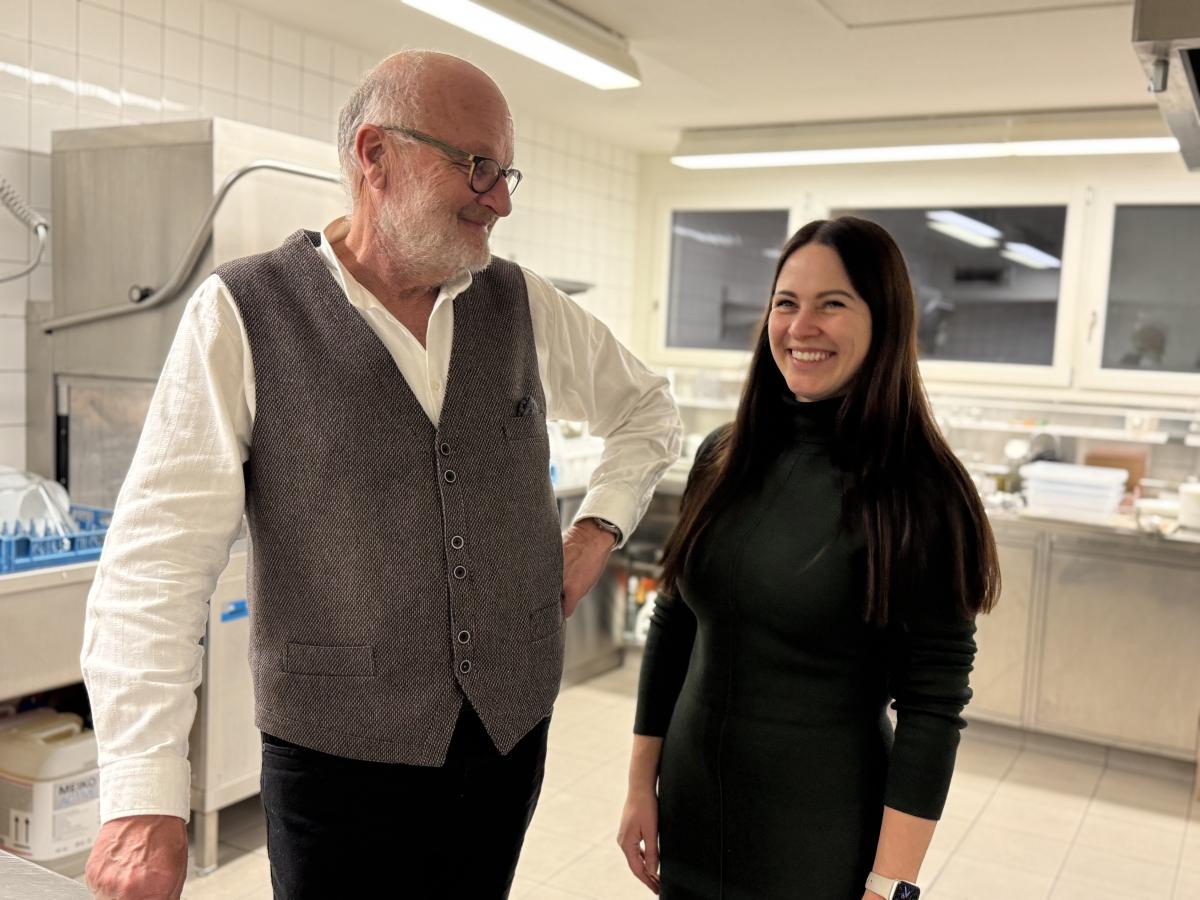
Anna Uminska plays a central role in everyday life at Sonnenhof, accompanying the residents as their housemother. Together with Alexander Lüchinger, she organized transport, coordinated the arrival of the families and provided support with translations and daily organization from the very beginning.
‘I have always felt great support from the Swiss community. The people here are extremely helpful and friendly,’ she says.
Voices from Sonnenhof
The stories of the people themselves also show what the Sonnenhof project is achieving:
‘I felt like a small, helpless child in an unfamiliar world,’ recalls Yaroslava Kharytska of her arrival in Küsnacht with her son. The language was foreign, the uncertainty great – but step by step, a new everyday life emerged: school attendance, medical care and initial social contacts provided stability. ‘Over time, I realized that life must be lived here and now, not just waiting for change.’ Today, Yaroslava is learning German, looking for work and looking ahead despite all the uncertainty – supported by the help she has received since day one.
For Alina Skuratova, the early days were marked by fear and uncertainty. The same was true for her son. ‘For a long time, he thought we would return soon,’ she says. But with the support of the school, the community and the Sonnenhof community, her life has gradually stabilized. Today, her son is doing an apprenticeship, a sign that it is possible to settle in.
What other municipalities can learn from Küsnacht
When asked what he wishes for the future, Markus Ernst replies openly: ‘Of course, my wish would be that such projects were not necessary at all. But I am grateful that we in Küsnacht can make our small contribution to Ukraine with Sonnenhof. And I am grateful that, even after almost four years, citizens continue to be involved in Sonnenhof.’
At the same time, he emphasizes the importance of local engagement: ‘Neither the municipality nor private individuals alone would have been able to make the “Sonnenhof project” a long-term success story.’ The clear message: solidarity thrives on cooperation – between authorities, civil society and committed individuals.
An example for other municipalities
The Sonnenhof project in Küsnacht is an example of how Swiss municipalities – both large and small – can take concrete responsibility when people fleeing their homes need protection and prospects for the future. Especially on a day of remembrance such as the fourth anniversary of the full-scale war in Ukraine, this project shows how local solidarity can work: sustainably, humanely and communally.
Your community can also help: whether through accommodation, opportunities for encounters or targeted support, every community can make a contribution. Küsnacht shows how local solidarity can change lives.
Get involved – find out more from your local authority, support our work or contact us for specific ideas: https://unrefugees.ch/en/contact-us