She grew up listening to the stories of her Alsatian grandfathers, who were forced into the German army during the Second World War. Men who, decades later, still cried when they talked about the help they received from humanitarian organizations. Céline Schmitt has never forgotten those tears. Today, as UNHCR spokesperson, she has embodied for 18 years the most concrete, but also the most demanding, aspects of being a humanitarian.
‘I have always wanted to fight against injustice.’
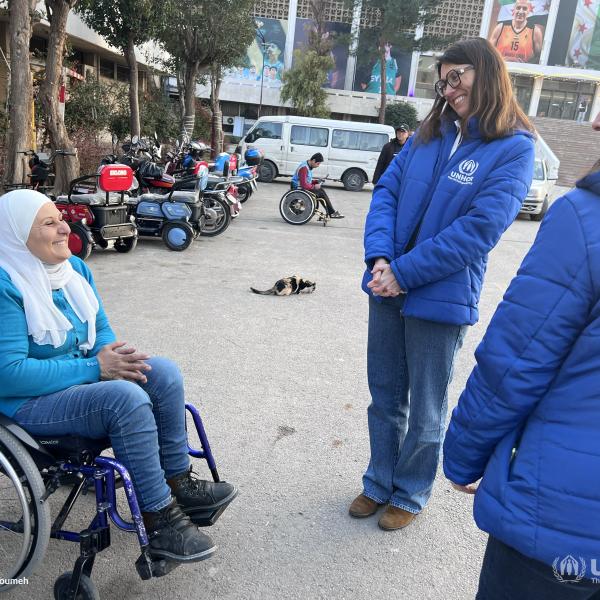
What attracted you to humanitarian work, and how has this life shaped you?
Being forced to flee your country because of war is, for me, one of the greatest injustices in the world. Helping victims of war is also a conviction fuelled by my family history. One of my grandfathers, who was forced to fight in the German army when he was 16, celebrated his 18th birthday in the Danzig Corridor. There, a woman who had nothing made him a rice cake. He still cried about it at the end of his life when he told me this story.
‘Ever since I was little, I've said to myself: I too want to have a positive impact on people's lives.’
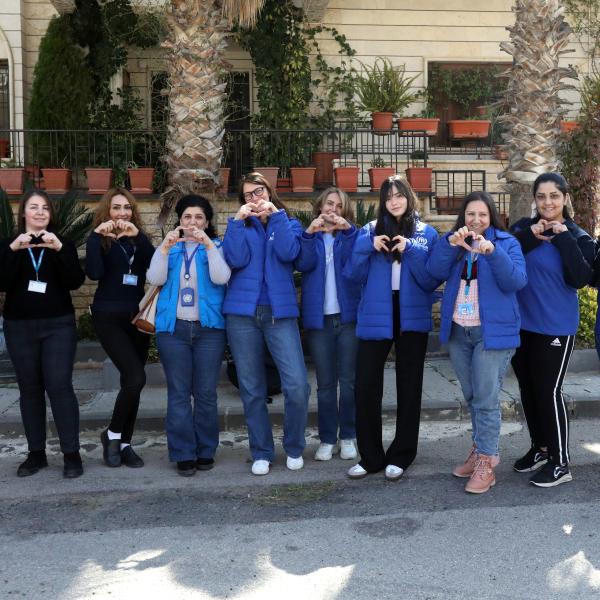
Is being a woman an obstacle or a strength in your work?
A strength, without a doubt. Humanitarian work is human work, in contact with people, in contact with families, in contact with many women. I can sit with them, listen to them, try to understand them. Thanks to this time shared together, concrete and specific initiatives have been developed that are adapted to these women's contexts: microfinance, support for women entrepreneurs, empowerment projects. Because having an income means having a place in society.
‘I learned my job from the women I met: in Afghanistan, Syria, the Democratic Republic of Congo and Chad. They taught me so much and, above all, inspired me with their initiatives.’
Is there one encounter that has stayed with you?
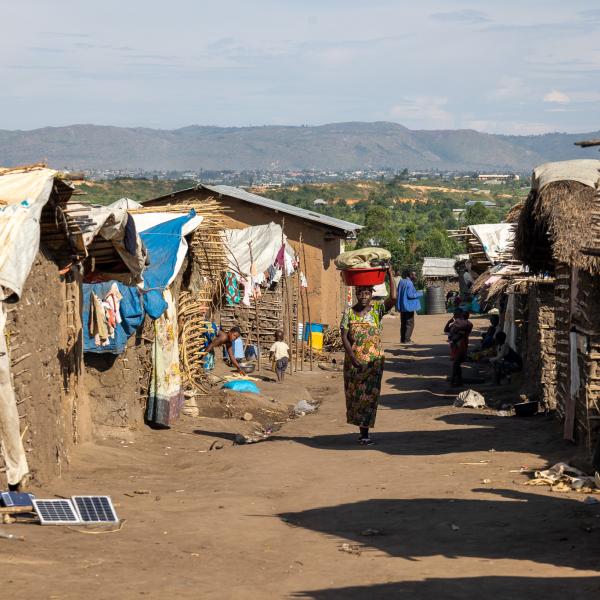
It was in 2010, in the north-east of the Democratic Republic of Congo. I was in a camp for displaced persons where people had arrived after an attack by the LRA (Lord's Resistance Army) on a village the night before. The atmosphere was heavy; some women were injured and had left everything behind when they fled. And then suddenly, the women started running towards a hut at the entrance to the camp, with great enthusiasm. I followed them wondering what happened, and that's when I saw a nun arriving on a bicycle: it was Sister Angélique Namaika.
She had come to give a literacy class to young teenage girls and women, some of whom had been kidnapped as teenagers. She didn't stop at literacy: she also taught sewing, cooking and skills to help them earn a living to support their families. She helped women become independent and take control of their lives. As if that weren't enough, Sister Angélique also took in more than 30 orphans into her home.
In 2012, I quietly nominated her for the UNHCR's Nansen Award, without much hope because the competition is fierce. But Sister Angélique was chosen as the winner! The award comes with a sum of money, which she used to fund a bakery, a cooperative, a school and a clinic for children, and to purchase agricultural land.
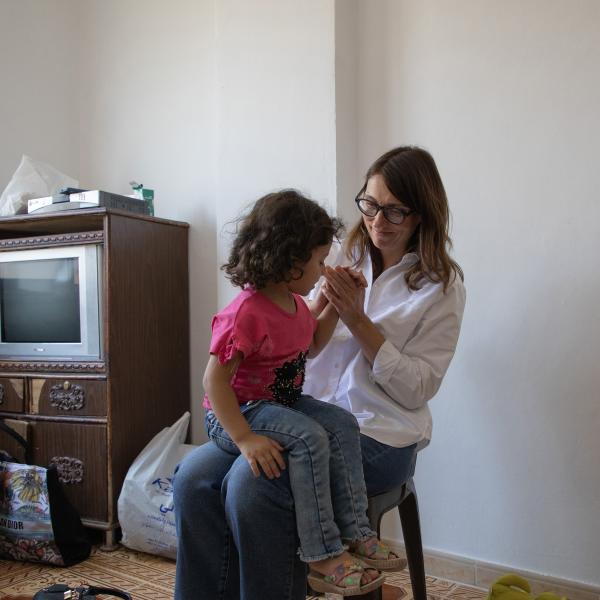
How do you cope with the distance from your loved ones?
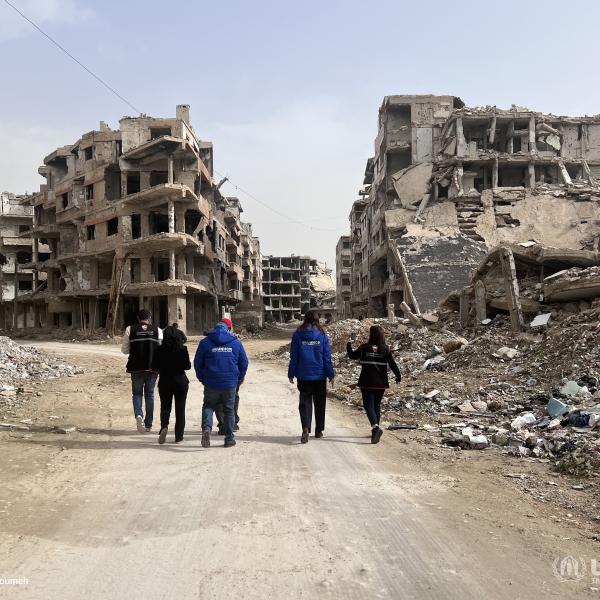
Two years ago, I went back into the field, to Afghanistan and then Syria, when my daughter was five years old. It was a difficult choice, but necessary to be able to continue doing my job and help displaced people. Being separated from my family is not easy, but being a mother guides me in my work. I can see in my daughter's eyes that she is proud of me. Recently, she told me something that really touched me:
‘Maman, I want you to come back, but I want you to keep saving the world.’
What would you say to a woman considering a career in humanitarian work?
I encourage all women who want to get involved in humanitarian work to do so, because we need talented women in this sector. It's a job that requires you to love people, to be people-oriented and to surround yourself with the right people. Doing just this, being rightly surrounded, allows you to continue to be committed to your career. And it allows you to balance your work and personal lives. Today, there are many different lifestyles and family models, and many different paths to take.
‘You have to find your own path, do things the way you feel is right. And surround yourself with the right people.’
Eighteen years in the field, two grandfathers who inspired her vocation, which has allowed Céline to meet extraordinary, inspiring, determined and resilient women in every country where she has worked. Céline Schmitt did not choose humanitarian work because of some abstract ideal: she chose it because she has known since childhood what it means to have a helping hand at the right moment.