Food is often one of the first languages we learn – a language of comfort, memory, and belonging. For people forced to flee their homes, cooking becomes much more than daily nourishment. In refugee kitchens around the world, treasured family recipes are kept alive, offering strength during uncertain times and a sense of home when everything familiar feels distant.
The end-of-year festive season is a time when many of us reconnect with loved ones, reflect on the year gone by, and gather around meals cooked with care. In that spirit, this article brings together a selection of both sweet and savoury recipes contributed by refugees – dishes that evoke warmth, celebration, and togetherness. Whether you’re drawn to pastries scented with orange blossom or hearty winter comfort foods, you’ll find something here to bring people together. These recipes from Syria, Yemen, El Salvador, Ukraine, Myanmar, Iran and beyond are an invitation: to cook, to share, and to celebrate the rich tapestry of cultures that now shape our communities.
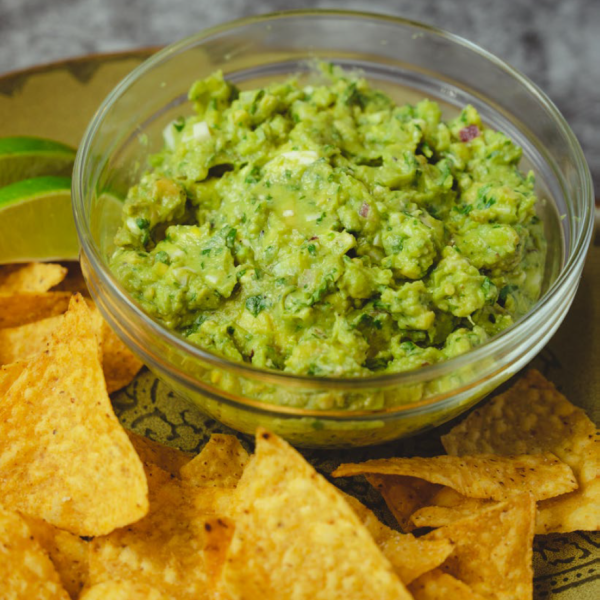
1. Lucila’s Salvadoran-style guacamole – El Salvador
By Lucila Cabrera
Lucila fled civil conflict in El Salvador, spending years separated from her husband before resettling in Canada. Rebuilding life meant recreating flavours from home – and this guacamole, enriched with hard-boiled eggs and feta, became a favourite. It’s perfect for holiday tables because it’s bright, creamy, and incredibly shareable, pairing beautifully with fresh vegetables, chips, or as a starter before a festive feast.
Recipe for Salvarodan guacamole
Ingredients & preparation
Serves: 4–6
- 4 ripe avocados
- 3 eggs
- Juice of 1–2 limes
- 225 g feta cheese, crumbled
- 1 tbsp chopped cilantro
- 1 tbsp chopped red onion
- 1 tbsp finely chopped jalapeño (optional)
Directions:
- Hard-boil eggs (cover with water, boil 15 min). Cool, peel, chop finely.
- Chop cilantro, onion, jalapeño; place in bowl.
- Cut avocados, score flesh, scoop out gently into bowl.
- Add chopped eggs.
- Add feta and lime juice; fold gently without mashing the avocado too much.
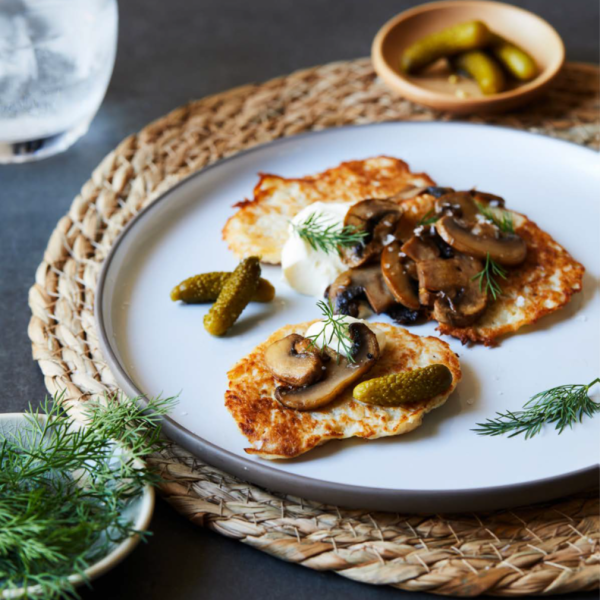
2. Deruny (Ukrainian potato pancakes) – Ukraine
By Tetyana and Olena
Deruny – crisp on the outside, tender inside – are a Ukrainian comfort classic, shared here by Tetyana and her daughter Olena. After fleeing Ukraine, they found solace in cooking together, recreating dishes that reminded them of home. Deruny were often made on cold evenings, when families gathered around the table to enjoy something warm, simple, and nourishing. They make a perfect addition to festive spreads because they’re easy to share, universally loved, and pair well with dips, roasts, or as a cosy appetizer.
Recipe for Deruny (Ukrainian potato pancakes)
Ingredients & preparation
Serves: 4
- 600 g potatoes, peeled
- 1 medium onion
- 1 egg
- 25–30 g flour
- 1–2 g salt
- 70–80 ml vegetable oil (for frying)
- 120–150 g sour cream (to serve)
Directions:
- Grate potatoes and onion finely; squeeze lightly to remove excess liquid.
- Add egg, flour, and salt; mix to form a loose batter.
- Heat oil in a frying pan over medium-high heat.
- Spoon small pancakes into the pan and flatten gently.
- Fry 2–3 min per side until golden brown.
- Serve hot with sour cream.
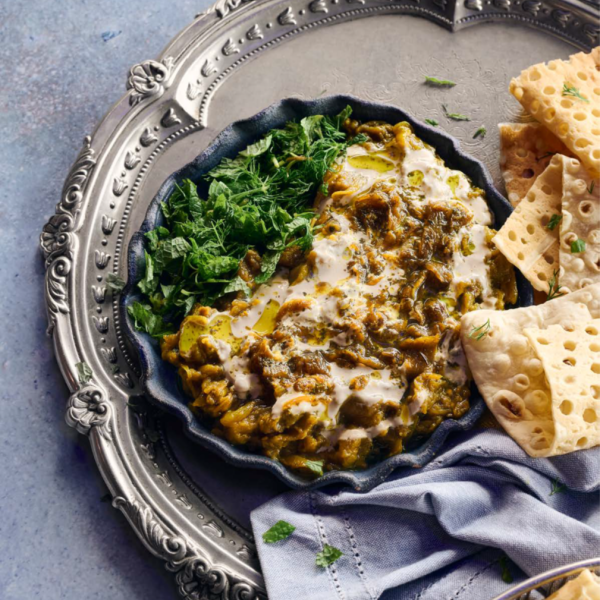
3. Kashk e Bamedjan (Eggplant & tomato stew with joghurt) – Iran
By Nahid
This aromatic Iranian dish comes from Nahid, who learned to cook by watching her mother in their family kitchen before persecution and displacement forced them apart. Kashk e Bamedjan is a classic comfort dish – silky eggplants cooked down with tomatoes, garlic, and rich joghurt (kashk) – often shared with guests alongside warm bread. During the festive season, its warm spices and creamy texture make it a wonderful, communal dish to gather around.
Recipe for Kashk e Bamedjan
Ingredients & preparation
Serves: 4
- 2 large eggplants (approx. 700–800 g total)
- 2 medium tomatoes, chopped
- 1 onion, chopped (120 g)
- 3 cloves garlic, minced
- 5 g turmeric
- 5 g black pepper
- 5 g salt
- 60–80 ml vegetable oil
- 60–80 ml kashk (fermented whey) or Greek yogurt (substitution)
- Fresh mint to garnish
- Optional: bread for serving
Directions:
- Peel eggplants; slice lengthwise. Salt them lightly and let rest 15–20 min.
- Pat dry and fry in hot oil until golden; set aside.
- In the same pan, sauté onion until soft; add garlic, turmeric, pepper, and salt.
- Add chopped tomatoes; cook until softened into a sauce.
- Return eggplants to the pan and simmer gently 15–20 min.
- Stir in kashk or yogurt and warm through (do not boil).
- Garnish with mint and serve with warm bread.
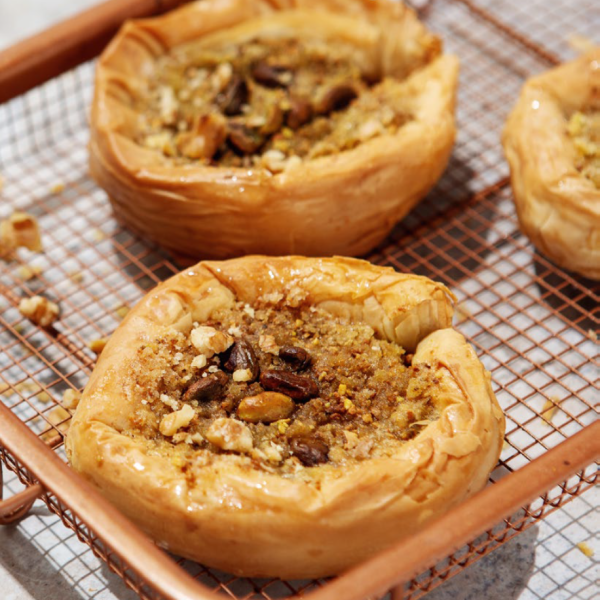
4. Nightingale’s nest (‘Ish El Bulbul) – Syria
By Tareq Hadhad
This elegant Syrian pastry, shaped like tiny nests filled with pistachios, is shared by Tareq Hadhad, who rebuilt his life after fleeing war in Syria and went on to found Peace by Chocolate. For Tareq, food – and sweets in particular – became a way to reconnect with community and create joy. Nightingale’s Nest is perfect for the festive season: delicate, fragrant, golden, and ideal for sharing on a dessert table.
Recipe for nightingale’s nests
Ingredients & preparation
Serves: 15–18 pieces
- 15–20 sheets filo pastry
- 450 g sugar
- 100 g ground pistachios (or walnuts/almonds)
- 240 ml water
- 180 ml clarified butter, melted
- 15 ml lemon juice
- 15 ml orange blossom water
Directions:
- Preheat oven to 190°C.
- Mix pistachios with 50 g of sugar.
- Prepare syrup: combine 400 g sugar + 240 ml water. Heat until dissolved, add lemon juice and boil ~6 min until syrupy. Add orange blossom water.
- Brush 2 baking sheets with butter.
- Lay a filo sheet with the long side facing you; brush half with butter, fold lengthwise, brush again.
- Sprinkle ~20 g filling in a narrow line along the folded edge. Fold borders over filling and roll lengthwise.
- Coil loosely into a nest shape and tuck end underneath.
- Repeat with remaining sheets.
- Bake 20 min until golden.
- Cool 5 min, then drizzle each nest with syrup and sprinkle with pistachios.
5. Bint Al-Shan (Yemeni honey cake) – Yemen
By Zekrah Ameen
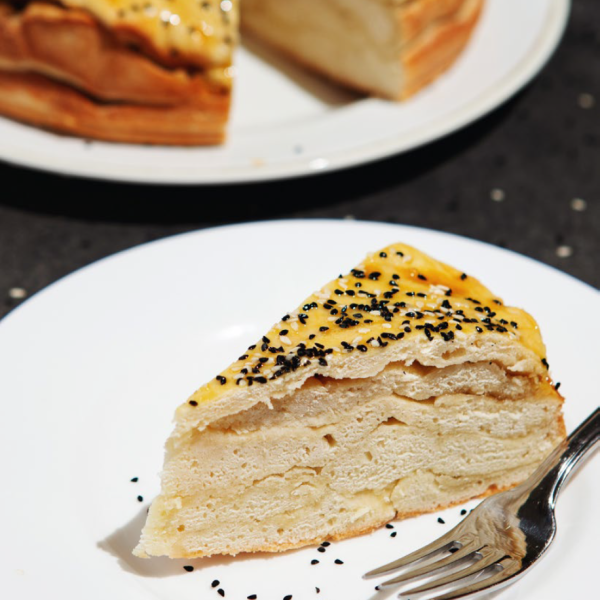
Zekrah Ameen treasures Bint Al-Shan because it was served at her wedding, making it a symbol of love, celebration, and Yemeni tradition. After fleeing conflict, she now shares this layered honey cake with new friends. Soft, flaky, subtly sweet, and drizzled with honey, it’s ideal for winter gatherings where guests tear it apart layer by layer – a dessert made for sharing.
Recipe for Yemeni honey cakes
Ingredients & preparation
Serves: 4–6
- 480 g flour
- 3 eggs + 1 yolk
- 360 ml water
- 170 g ghee or melted butter
- 10 g yeast
- 12 g sugar
- 10 g powdered milk
- 1.5 g salt
- 1.5 g vanilla
- Sesame seeds + honey for garnish
Directions:
- Preheat oven to 200°C.
- Activate yeast in 60 ml warm water.
- Mix flour + salt in a bowl.
- Whisk eggs, sugar, powdered milk, ghee, 240 ml water, and yeast mixture.
- Add flour mixture and knead ~15 min until soft.
- Cover and rest 30 min.
- Divide dough into 12–15 balls, rest 15–30 min.
- Grease a 25–30 cm round tray. Roll each ball thinly and layer them, brushing each with ghee.
- Brush top with egg yolk + vanilla; sprinkle sesame.
- Bake 25–40 min until golden.
- Pour warm honey on top and cut into triangles.
6. Ma’amoul cookies with dates and pistachios – Syria
By Aya Wadi
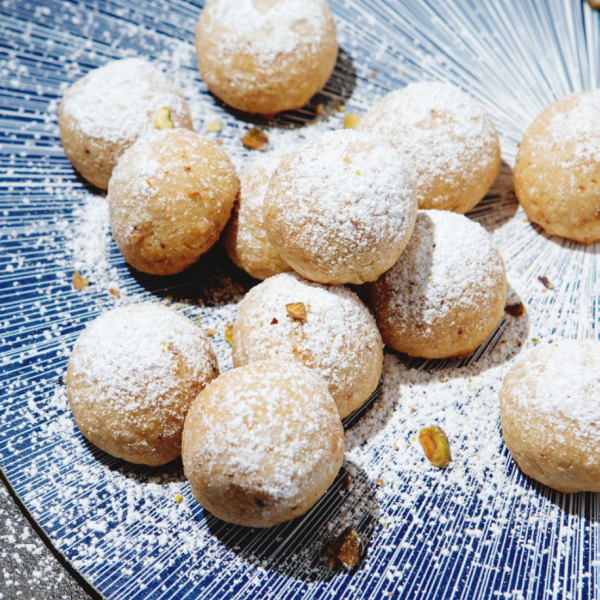
Aya Wadi fled Aleppo with her family and later opened a Syrian restaurant with her mother. Ma’amoul – ancient festive cookies shaped with carved molds – embody hospitality and togetherness. They are shared for major holidays across the Middle East, making them a beautiful addition to Christmas or New Year’s gatherings.
Recipe for cookies with dates and pistachios
Ingredients & preparation
Makes: 25–30 cookies
Dough:
- 310 g all-purpose flour
- 150 g melted ghee or butter
- 240 ml warm water
- 100 g icing sugar
- 100 g regular sugar
- 4 tbsp orange blossom water
- 2 tbsp rose water
- Optional: Greek Mistika, mahlab
Fillings:
Pistachio filling:
- 200 g pistachios
- 75 ml sugar syrup
- 15 g melted ghee
- Dash rose & orange blossom water
Date filling:
- 200 g ground dates
Directions:
- Combine flour + melted ghee; refrigerate 30 min.
- Warm water + sugar in a cup.
- Warm rose/orange blossom water with Mistika; add to dough.
- Knead 3–5 min, adding sugar water gradually.
- Portion dough into 25–30 balls.
- Prepare fillings by processing ingredients.
- Flatten dough to 8–10 mm thickness; add ~1 tsp filling and seal.
- Press into ma’amoul molds if available.
- Place on greased sheet and bake at 175°C for 15–20 min until lightly golden on bottom.
7. Duú Fiça – Myanmar (Rakhine state)
By Faisal Mohammed
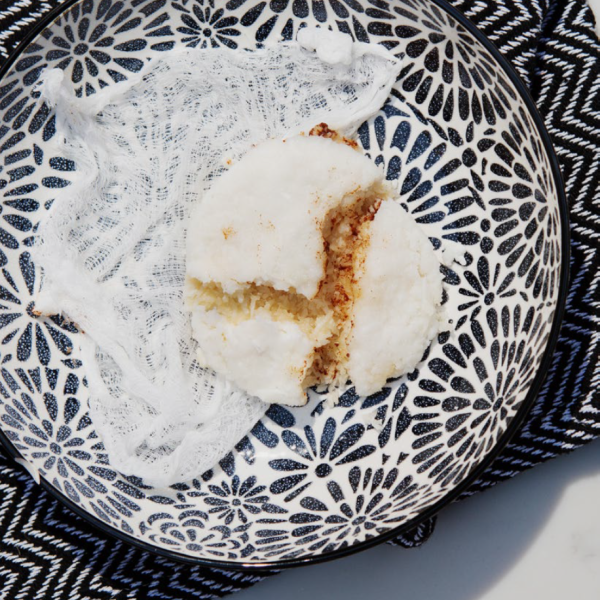
Faisal grew up stateless, born after his family fled violence in Myanmar. In the refugee camp, the streets around the mosque filled with the comforting smell of Duú Fiça – a simple coconut-rice cake steamed in cloth. Recreating this dessert now helps him share the story of the Rohingya people. Duú Fiça is light, subtly sweet, and lovely at festive tables, especially as a gentle dessert after heavier holiday meals.
Recipe for Duú Fiça
Ingredients & preparation
Serves: 2
- 240 g rice flour
- 100 g grated coconut
- 200 g jaggery or brown sugar
- 120 ml water
- 5 g salt
Directions:
- Sieve rice flour with salt; sprinkle in water until small lumps form (not wet). Rest 30 min or overnight.
- Heat your steamer until steam rises.
- Wet a muslin/cheesecloth.
- Sieve rice flour halfway into a small ramekin.
- Add ¼ ramekin of jaggery + coconut; top with more rice flour.
- Cover tightly with cloth and flip upside-down onto steamer.
- Steam 5–10 min.
- Unwrap carefully and repeat. Cool before serving.
If these recipes have inspired you, there is so much more to explore. Discover additional stories and dishes from talented refugee cooks in our feature article, or dive even deeper by downloading our free cookbook filled with flavours, memories, and traditions from around the world. Your next favourite festive recipe may be waiting right there!